MACHAS
News - All the latest news straight from the artists themselves

Machas welcomes Giulia Conoscenti
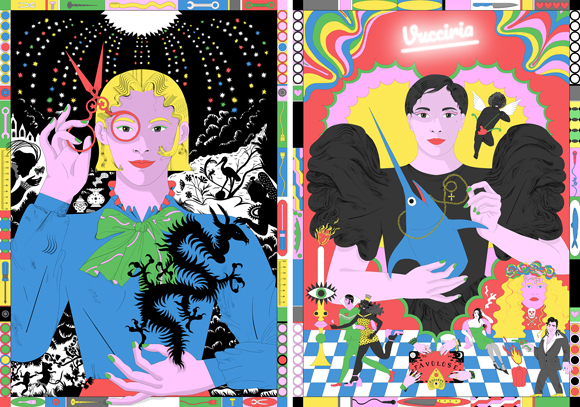
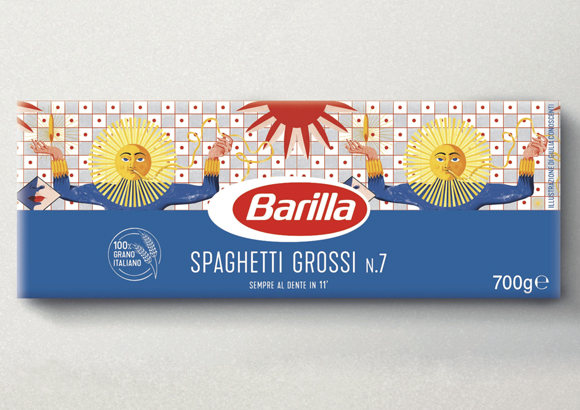
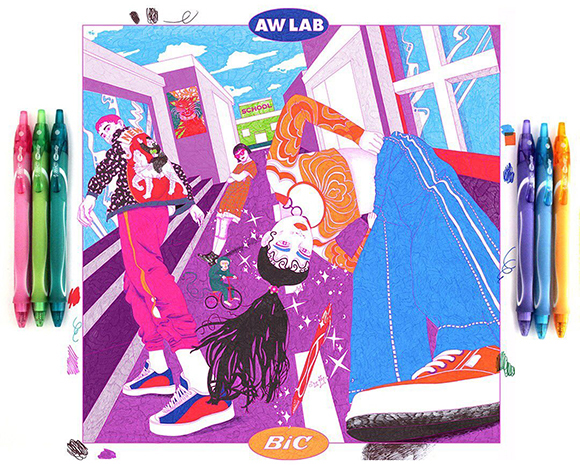
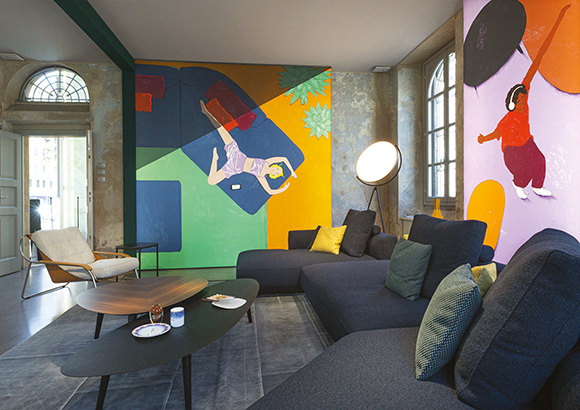
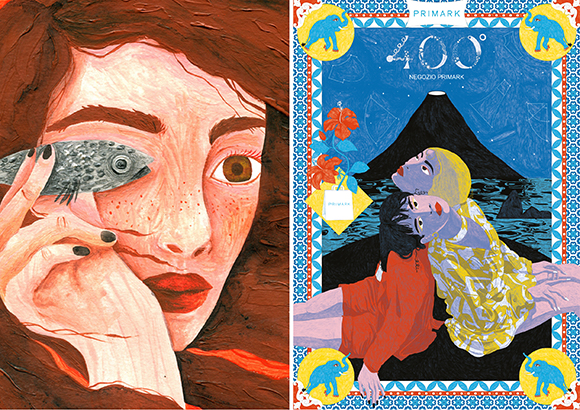
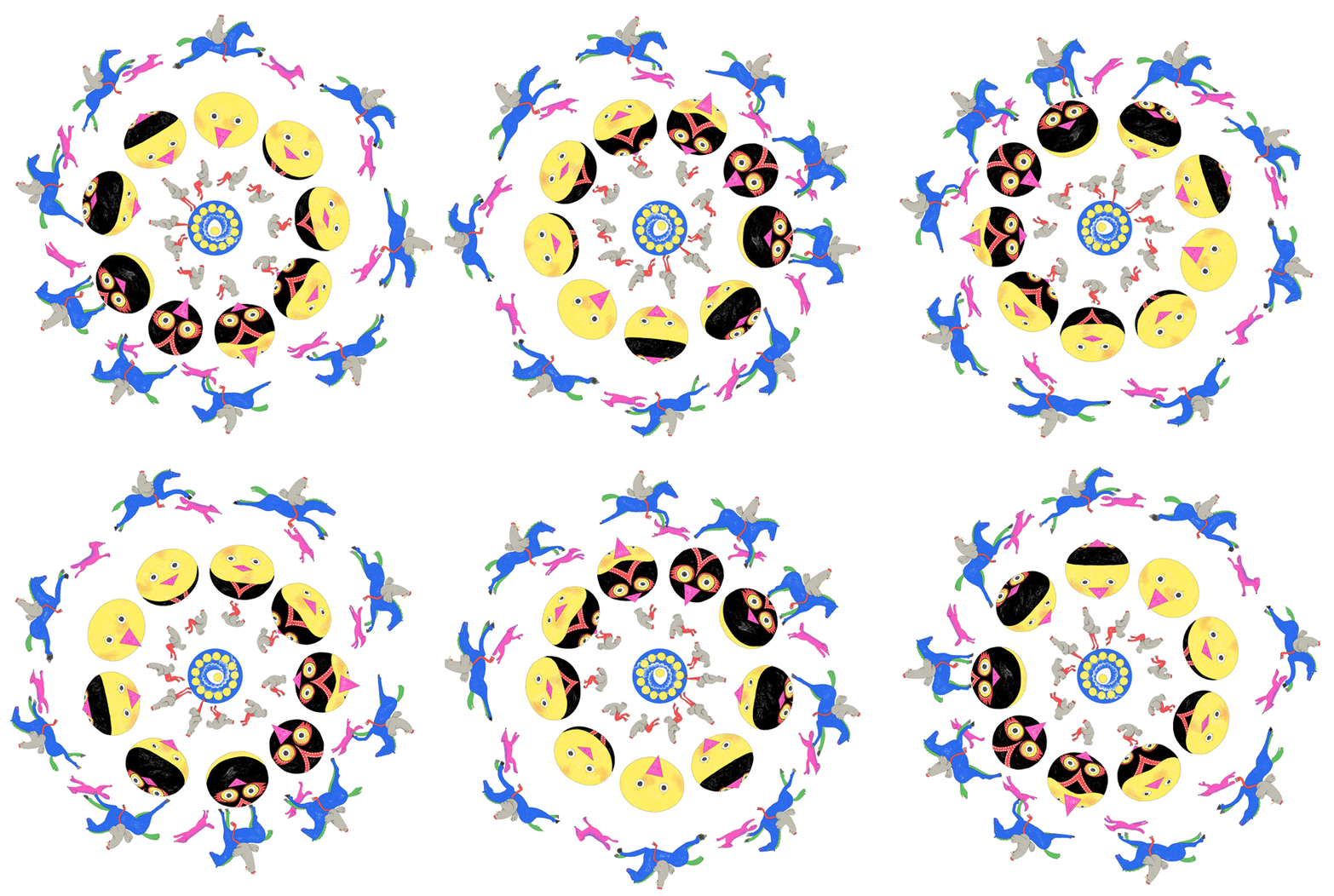
Giulia Conoscenti is a visual artist with illustration at the heart of her practice - though it rarely stays still. Her work extends into animation, ceramics, and mixed media, driven by a genuine curiosity about what happens when an image takes on movement, texture, or form.
A graduate in industrial design who later trained in visual arts at ISIA Urbino, Giulia brings together rigorous visual thinking and an instinctive, tactile approach to making. Her energy, evident in her saturated palettes, textured surfaces and fluid narratives, immediately resonated with us. Her depth of voice, creative range and the warmth she brings to every interaction felt immediately at home with Machas, and we’re delighted to welcome her to the roster.
This interview offers a glimpse into Giulia’s world: a practice shaped by memory and place, driven by experimentation, and animated by a genuine love for the act of mark-making itself.
Interview
M: Let’s start from the beginning: what’s the first time you remember coming into contact with art in a way that left an impression?
GC: I clearly remember that I was five years old at the Musée d’Orsay and suddenly found myself standing in front of Rousseau’s The Snake Charmer. At the time, the painting felt enormous—almost as if I could step inside it. That slightly dark, dreamlike landscape, with its mysterious figure in the foreground, attracted and frightened me at the same time. I stood there, transfixed, for what felt like an eternity.
M: You often move between analogue and digital tools. What drives your interest in exploring such a wide range of materials — and what keeps you coming back to the act of leaving a trace?
GC: I’m a very curious person, and I get bored easily. That pushes me to look for new things, to study and learn. I change techniques often, experiment a lot, and sometimes use materials that aren’t meant for that specific purpose—like cooking oil or coarse salt. I mix techniques that are very different from one another. Being able to surprise yourself in your work, whatever it may be, is essential if you want to keep doing it with love.
M: Your visual language shifts across projects, but remains unmistakably yours. Is that fluidity something you consciously seek, or does it emerge from the demands of each commission?
GC: It depends a lot on the project, the client, and the audience. Like any designer, I adapt my visual language to the context and requirements, without ever losing my way of communicating or my expressive sensibility.
M: Animation is a fundamental part of your practice. What does it allow you to explore that static drawing cannot?
GC: We, as human beings, are always in motion, and everything around us changes, shifts, and evolves. Animation allows me to explore the expressive potential of a gesture—even a very small one. Think of hands, for example: how many things they can communicate.
M: Your animations recall the influence of Gianluigi Toccafondo [Italian artist and animator internationally recognised for his experimental approach to animation and drawing]. How has he shaped your practice?
GC: Toccafondo was my professor at ISIA in Urbino, and I was incredibly lucky to meet him. He had a huge influence on both my personal and professional growth. He taught me how to communicate complex ideas through simple movements, and how a technique, a mark, or even a mistake can help express something. Most importantly, he taught me to enjoy my work and to let a project go where it needs to go.
M: You also work with ceramics. How does your thinking change when an image becomes three-dimensional?
GC: Almost nothing changes—I simply add another perspective and new constraints. I have to think about balance, weight, and thickness, which I don’t consider in two dimensions. The same happens in animation: changing point of view, using rough textures to support movement. That’s the beauty of illustration—it allows you to move across formats, turning limits into possibilities.
M: Tradition and contemporaneity seem to coexist naturally in your work. Is that balance something you actively pursue, or does it emerge more instinctively?
GC: I love discovering the roots of things. If I hadn’t become a visual artist, I probably would have been an archaeologist. I’m fascinated by etymology, by how certain beliefs or religious and pagan festivities originated, even by the history of food. I then try to translate everything in my own way — which I hope feels fresher and more contemporary. The old and the new coexist and complement each other; sometimes one prevails, sometimes the other.
M: Many of your female characters appear strong yet dreamy. What do they represent for you?
GC: They represent the women I look up to and hope to be—or become. We still live in a society that often undermines women’s freedom. We still have to fight for our rights, for safe working environments, for the simple freedom to go home alone at night. That is no longer acceptable. My female characters are strong, proud, sometimes angry, and they definitely dream of a different world.
M: You have a rare ability to make minimalism and complexity coexist within the same narrative. How do you maintain that balance?
GC: It’s a way of understanding the world, which is naturally complex—made of relationships, elements, and connections. When exploring that complexity, I always look for what is essential, so the work can speak to as many people as possible.
M: Sicily seems to echo throughout your work — sometimes subtly, sometimes more overtly. How do those roots continue to influence your imagination?
GC: There’s a quote by Pirandello [Sicilian writer and playwright, and a central figure in 20th-century European literature] that perfectly describes how I feel about the land where I was born and raised. He said: “and there a person is born an island within an island and remains so until death, even living far from his harsh native land surrounded by the immense and jealous sea.” I wasn’t just born on the island—I feel like I am my island. That comes through in my work: in the vivid colours, in the texture of a mark, liquid like the sea or rough like the rocks. From irony and lightness to the complexity of contradictions that define my region.
M: As an artist and teacher, what do you most encourage in your students?
GC: Curiosity, above all. I often say, “Ask me anything—even nonsense.” It’s the questions we don’t yet have answers to, and the mistakes we make, that help us grow and stay active—and ultimately become better designers.
M: In a constantly changing world, what do you see as the role of an artist today?
GC: I often tell my students that anyone who has the opportunity to speak to people—through words or images—also has a social responsibility. It’s important to be interested in the world we live in, to take a position, and to try, in one’s own small way, to contribute to a better future.
M: What led you to join Machas, and what resonated with you in its approach?
GC: Several things. First, the idea of joining an all-female agency, made up of strong, capable women, excited me enormously. We also share an essential value: the desire to vary, experiment, and approach new—even complex—projects with seriousness and determination. When people make you want to start working right away, that’s the best thing that can happen.
See more of Giulia Conoscenti’s work here.